Internal vs. External Fragmentation: Key Differences & Solutions in OS
Difference Between Internal and External Fragmentation in OS
In Operating Systems, efficient memory utilization is key to system speed. However, fragmentation often acts as a hurdle—a phenomenon where memory blocks are wasted, leaving the system unable to satisfy memory requests despite having free space.
What is Internal Fragmentation?
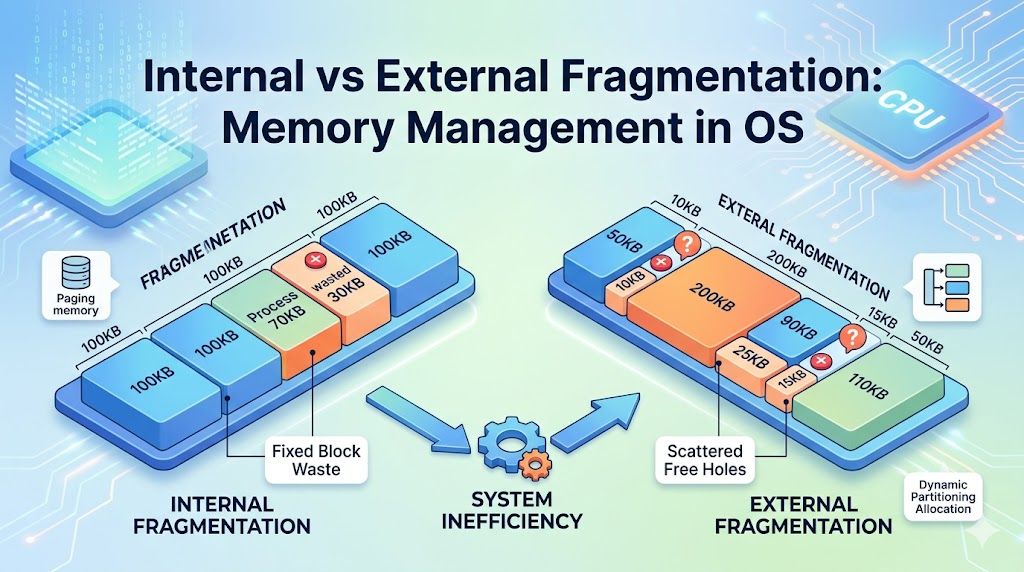
Internal fragmentation occurs when memory is allocated in fixed-sized partitions. If a process is smaller than the allocated memory block, the remaining space inside that block goes to waste. This space is "internal" to the partition and cannot be accessed by other processes.

Fig 1: Internal Fragmentation occurring in fixed-size memory blocks.
What is External Fragmentation?
External fragmentation happens when total free memory exists to satisfy a request, but it is non-contiguous (scattered). The available memory is broken into small "holes" by other running processes, making it impossible to fit a large new process into one continuous slot.

Fig 2: External Fragmentation where free space is available but not usable.
Comparison: Internal vs. External Fragmentation
FeatureInternal FragmentationExternal FragmentationDefinitionWaste of space within an allocated block.Waste of space between allocated blocks.PartitioningFixed (Static) Partitioning.Variable (Dynamic) Partitioning.ManagementCommon in Paging systems.Common in Segmentation systems.Primary SolutionDynamic sizing or Best-fit.Compaction, Paging, or Segmentation.
How to Eliminate Fragmentation?
- 1. Compaction: Shuffling memory contents to place all free memory together in one large, continuous block. (Solves External Fragmentation).
- 2. Paging: Breaking processes into pages stored in non-contiguous frames. (Solves External Fragmentation).
- 3. Segmentation: Dividing programs into logical segments to allocate only the memory required. (Reduces Internal waste).
Conclusion: Understanding these differences is vital for mastering OS memory management. While internal fragmentation wastes small bits within blocks, external fragmentation prevents large processes from loading even when total free space is sufficient.
❓ Frequently Asked Questions
What is internal fragmentation in OS?▼
What is external fragmentation in OS?▼
Internal vs external fragmentation: Key differences?▼
How to avoid fragmentation in OS?▼
🎓 Need Help With Your Project?
AcadKits provides ready-made engineering projects, custom development services, and free developer tools for students.
📚 Related Articles
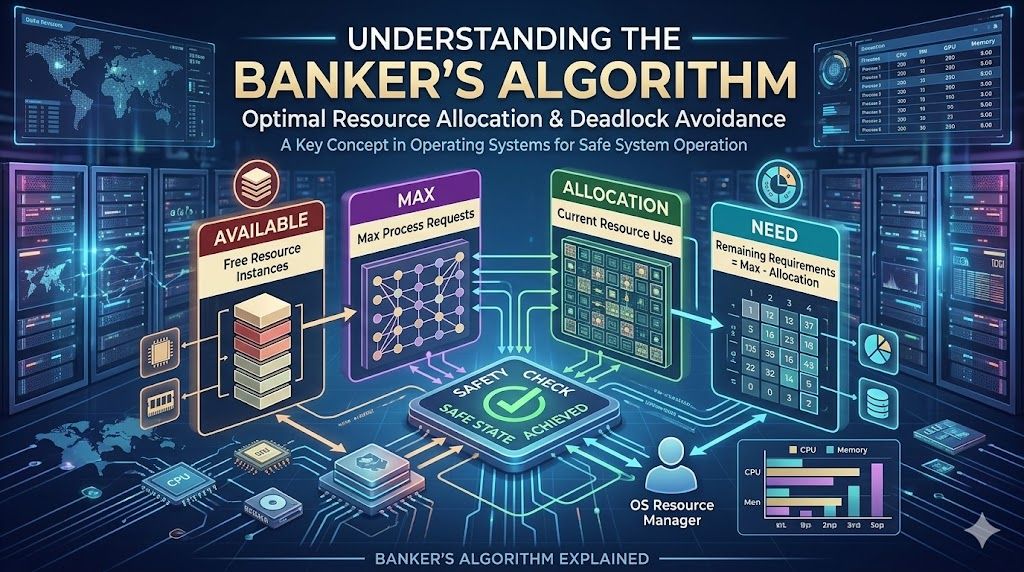
Banker's Algorithm in OS: How Operating Systems Avoid Deadlock
A deep-dive into the Banker's Algorithm — one of the most important deadlock avoidance techniques used in Operating Systems — explained with real examples, safety checks, and resource allocation tables.
⏱️ 10 min read
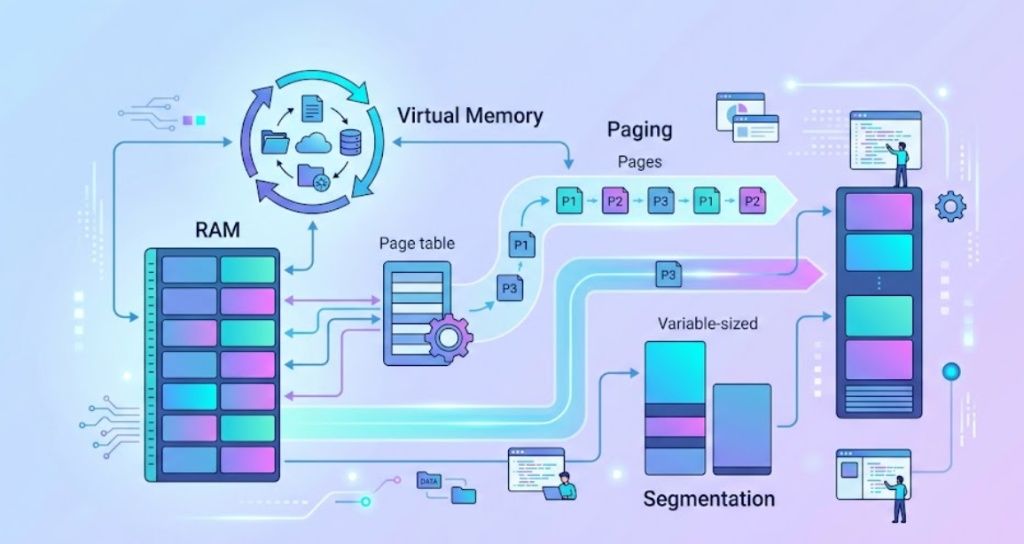
Memory Management in Operating System – Complete Guide
Memory management is one of the most important functions of an operating system. This guide explains paging, segmentation, virtual memory, fragmentation, and memory allocation techniques with diagrams.
0